Breathless Nights, Struggling Days: The Sleep Apnea and Erectile Dysfunction Connection You May Be Missing
For many men dealing with erectile dysfunction, the instinct is to focus squarely on the symptom at hand. A prescription is obtained, a treatment plan begins, and yet results feel incomplete or inconsistent. What often goes unexamined is what happens in the eight or so hours before intimacy even becomes a consideration—specifically, what is happening during sleep.
Obstructive sleep apnea (OSA) affects an estimated 30 million Americans, and a significant proportion of those individuals remain undiagnosed. Among men with erectile dysfunction, research has consistently found that sleep apnea occurs at rates far higher than in the general population. This is not coincidence. The two conditions share a physiological relationship that, once understood, changes how ED should be evaluated and treated.
What Sleep Apnea Actually Does to the Body
Sleep apnea is characterized by repeated interruptions in breathing during sleep—sometimes dozens or even hundreds of times per night. Each interruption causes oxygen levels in the blood to drop temporarily, triggering a cascade of physiological stress responses. The body interprets these episodes as emergencies, releasing cortisol and adrenaline, elevating heart rate, and disrupting the normal hormonal rhythms that restorative sleep is supposed to support.
Over time, this nightly pattern of oxygen deprivation and stress hormone release produces measurable damage. Endothelial cells—the thin layer lining blood vessels—become less capable of producing nitric oxide, the molecule responsible for relaxing and dilating blood vessels. Vascular inflammation increases. Blood pressure tends to rise. Testosterone production, which occurs predominantly during deep sleep cycles, is suppressed.
Each of these consequences maps directly onto the physiological requirements for healthy erectile function. An erection depends on robust blood flow, healthy vascular tissue, adequate testosterone, and a nervous system not chronically flooded with stress hormones. Sleep apnea quietly degrades every one of these prerequisites.
Recognizing the Warning Signs
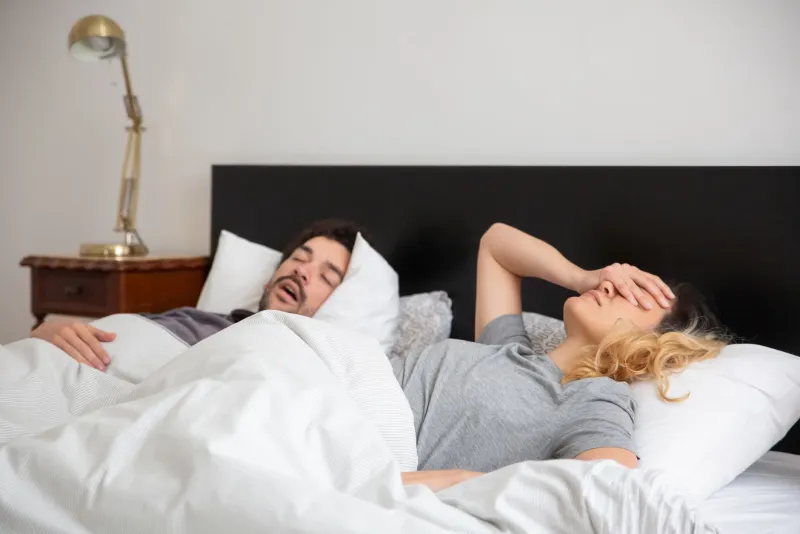
Because sleep apnea occurs during unconsciousness, many men have no direct awareness of it. Partners often notice the symptoms first—loud snoring, gasping or choking sounds, restless sleep, or long pauses in breathing. However, not every person with sleep apnea snores dramatically, and not every man with ED has a partner who can observe his sleep.
Daytime symptoms worth paying attention to include persistent fatigue despite what should be adequate sleep, morning headaches, difficulty concentrating, irritability, and a general sense of unrefreshing rest. Men who wake frequently to urinate, experience dry mouth upon waking, or find themselves nodding off during low-stimulation activities may also be experiencing the downstream effects of disrupted sleep architecture.
From an ED standpoint, the pattern worth noting is inconsistency. A man whose erections seem better after unusually restful nights, or who notices that fatigue and sexual performance seem to track together, may be experiencing the direct effects of sleep quality on vascular and hormonal function.
Why Tadalafil Alone May Deliver Incomplete Results
Tadalafil works by inhibiting the phosphodiesterase-5 (PDE5) enzyme, which allows nitric oxide to sustain its vasodilatory effect and support the vascular engorgement required for an erection. It is a highly effective medication with a well-established safety profile. However, its mechanism depends on a degree of baseline vascular health and nitric oxide availability.
When sleep apnea has chronically impaired endothelial function, reduced nitric oxide production, and elevated systemic inflammation, tadalafil is working against a compromised physiological backdrop. The medication may still provide benefit, but results can be less consistent, require higher doses, or feel underwhelming compared to what would be expected in a man with healthier baseline vascular function.
This is not a failure of the medication. It is a signal that an underlying condition may be limiting the ceiling of what any ED treatment can achieve on its own.
The Transformative Effect of Treating Sleep Apnea
The clinical evidence here is genuinely encouraging. Studies examining men who received CPAP therapy—the most common treatment for obstructive sleep apnea, involving the use of a pressurized air mask during sleep—have documented meaningful improvements in erectile function, independent of any ED-specific medication. Oxygen saturation normalizes. Testosterone levels often recover. Endothelial function improves as the nightly vascular stress is removed. Blood pressure frequently decreases.
For men already using tadalafil, addressing sleep apnea concurrently can substantially amplify results. The medication's mechanism is better supported by healthier vascular tissue, and the hormonal environment that underpins libido and arousal becomes more favorable. Many men report that treating sleep apnea was the missing variable that made their ED treatment feel truly effective.
Beyond sexual health, the broader quality-of-life improvements—reduced daytime fatigue, clearer cognition, improved mood, better cardiovascular markers—create a reinforcing cycle. Men who sleep better tend to exercise more consistently, manage stress more effectively, and experience fewer of the lifestyle-related factors that compound ED over time.
When to Seek a Specialist Evaluation
Any man experiencing ED alongside the daytime or sleep-related symptoms described above deserves a thorough evaluation that goes beyond an ED prescription. A primary care physician can order a sleep study—either an in-lab polysomnography or a home sleep apnea test—to assess whether OSA is present. Given that sleep apnea also carries significant cardiovascular risk, early diagnosis benefits health well beyond the bedroom.
Men who have been using ED medication with inconsistent results, particularly those who are overweight, have a thick neck circumference, snore regularly, or have been told they stop breathing in their sleep, should raise the question of sleep apnea explicitly with their healthcare provider. It is a conversation that could reframe their entire treatment approach.
At TadalafilDose, we emphasize that tadalafil is a powerful and well-validated tool—but it functions best as part of an informed, complete picture of a man's health. Identifying conditions like sleep apnea that silently undermine vascular and hormonal function is not a detour from ED treatment. It is central to achieving the full, sustained results that men are seeking.
Building a Complete Treatment Strategy
For men confirmed to have both sleep apnea and erectile dysfunction, the most effective approach typically involves treating both conditions in parallel. CPAP adherence, combined with appropriate tadalafil dosing, addresses the problem from multiple angles—restoring the physiological conditions that medication requires to work optimally, while the medication supports function during the period when vascular and hormonal recovery is still underway.
Lifestyle factors remain relevant as well. Weight loss in overweight men can reduce sleep apnea severity significantly, and the same cardiovascular improvements that benefit breathing during sleep also directly support erectile function. Regular aerobic exercise, reduced alcohol consumption, and consistent sleep schedules all contribute to both conditions simultaneously.
The path forward for many men is not simply a higher dose or a different pill. It is a clearer understanding of the full range of factors at play—and the willingness to investigate what is happening during those silent, unseen hours of the night.